The Silent Tongue is a haunting, emotionally charged Western that blends supernatural elements with the raw brutality of frontier life. The story centers on a grieving man named Talbot Roe, whose young wife Awbonnie has died, leaving him devastated and unable to move on. Talbot wanders the desolate plains carrying her corpse in a wagon, consumed by madness and sorrow. His refusal to let her go sets the tone for the film’s eerie and tragic atmosphere, where the living and the dead seem to coexist in a fragile, unsettling balance.

As Talbot sinks deeper into despair, Awbonnie’s father, the powerful Native shaman Silent Tongue, emerges as a driving force in the plot. Silent Tongue blames Talbot for his daughter’s death and believes her spirit cannot rest until her body is returned to their people. His presence is both threatening and sorrowful, shaped by his love for Awbonnie and his fury at the world that took her from him. The film slowly reveals that Silent Tongue’s rage is rooted not only in grief, but in a long history of injustice and displacement experienced by his tribe.
Meanwhile, a traveling medicine-show family enters the story, adding another layer of chaos and moral conflict. Their leader, Prescott Roe—Talbot’s father—sees Awbonnie as a commodity, a tragic figure he can exploit for entertainment. His attempts to manipulate the situation for profit spark tension within his family and create further danger for Talbot. These morally grey characters highlight the desperation of frontier life, where survival often means sacrificing compassion.
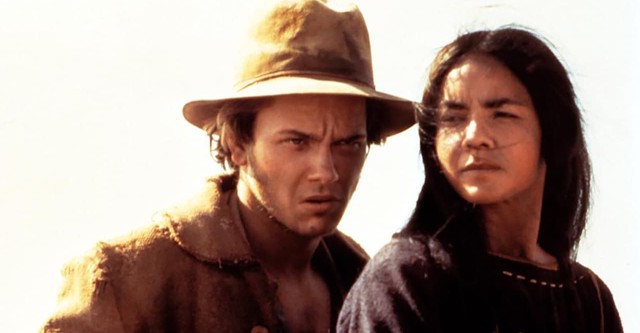
As the supernatural elements intensify, Awbonnie’s restless spirit begins to manifest. Her ghost becomes a central force, urging Talbot toward both release and destruction. Her haunting presence symbolizes the consequences of unresolved grief, cultural collision, and the violation of sacred traditions. The film builds a sense of inevitability, as though the land itself demands justice and closure.
In the latter part of the story, Silent Tongue confronts Prescott and Talbot in a violent clash fueled by trauma and misunderstanding. This confrontation unravels long-buried secrets and exposes the devastating impact of exploitation and cultural erasure. The tension between vengeance and forgiveness becomes the emotional core of the final scenes.
By the end, The Silent Tongue remains less a tale of ghosts than a meditation on grief, guilt, and the painful ties between families and cultures. The closing moments are somber and poetic, leaving the characters broken yet transformed, and allowing the spirit of Awbonnie to finally find peace in a world shaped by loss and longing.


