The film opens in the chaos following the collapse of Nazi Germany. On May 7, 1945 — just one day before Germany surrenders — one of the most powerful remaining Nazi leaders, Hermann Göring, surrenders to U.S. forces along with his family. Meanwhile, U.S. Associate Justice Robert H. Jackson begins arguing for an international tribunal rather than summary executions, believing that surviving Nazi leaders must face justice under the rule of law. His vision sets the stage for what becomes the legendary Nuremberg Trials.
At the heart of the story is U.S. Army psychiatrist Douglas Kelley (played by Rami Malek), who is brought in to assess the mental competence of 22 high-ranking Nazi prisoners — including Göring — in the lead-up to the trial. The goal: to determine if they are fit to stand trial and to monitor their psychological state to prevent suicides. Kelley’s task becomes more than medical — it’s deeply moral and psychological.

As Kelley begins his sessions with Göring (portrayed by Russell Crowe), the film gradually reveals a chilling psychological duel. Göring initially appears charming and composed, articulating denial and evasion. Kelley — expecting to find madness or psychosis — instead sees intelligence, narcissism, and a dangerous capacity for rationalization of evil. This discovery unsettles him: the monsters aren’t obviously deranged — they are disturbingly human.
In parallel, the legal team prepares for the tribunal. Jackson and his colleagues struggle to build a case that can hold these men accountable under international law, despite there being no precedent for such a comprehensive trial of state-sponsored atrocities. The courtroom scenes, mixed with the grim reality of evidence — including archival footage of horrors committed by the regime — confront the audience with the magnitude of crimes under scrutiny.
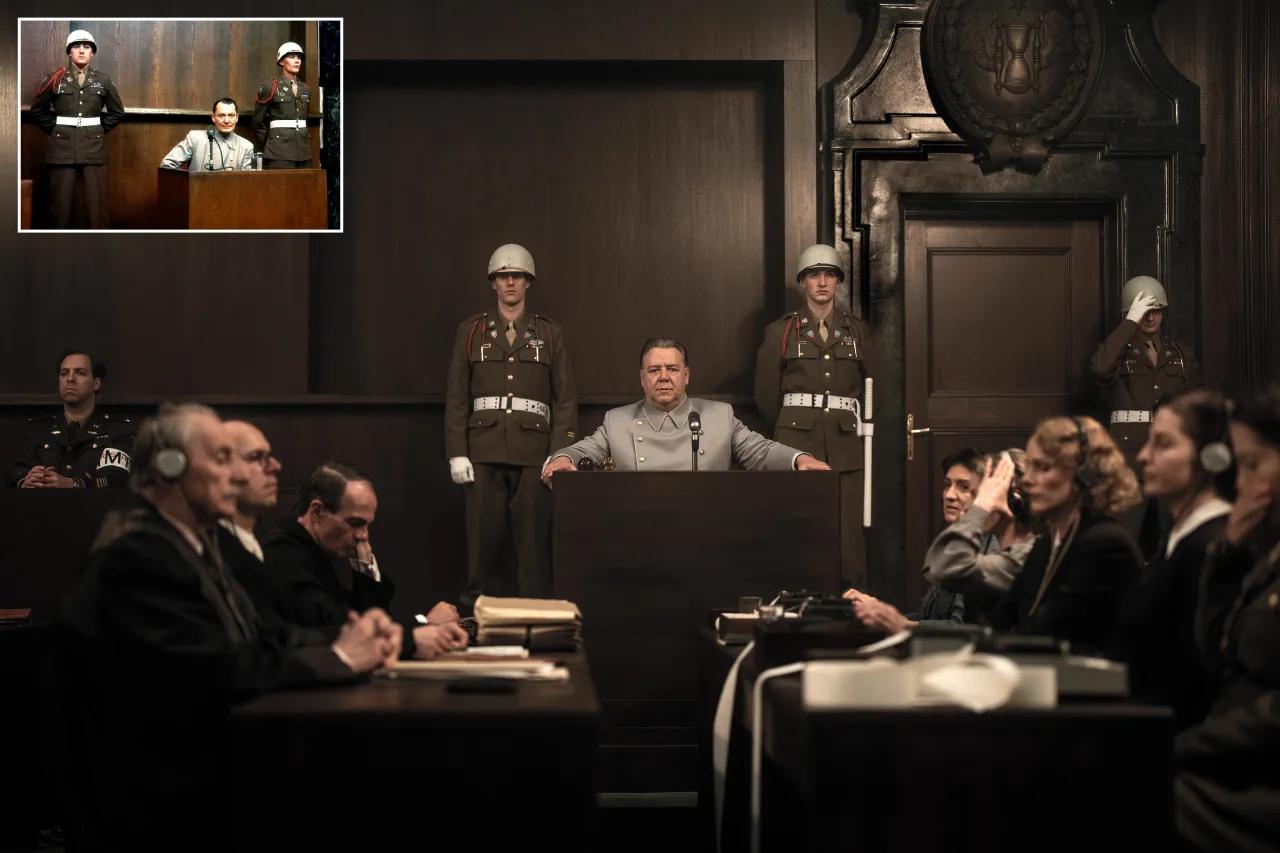
As the trial proceeds, tensions rise. Göring refuses to admit the full scope of the atrocities, even when faced with overwhelming evidence. During adjournments, Kelley’s growing doubts and disgust lead him to a breaking point — when he learns that Göring’s family is implicated in art theft investigations, and also when civilians’ suffering becomes impossible to ignore. The film doesn’t shy away from exploring how seductive evil can be under a veneer of reason and charisma.
Ultimately, the film delivers its verdict — not just in the courtroom, but in the human conscience. Göring is sentenced to death, though he escapes it by taking his own life. Kelley, psychologically scarred by what he’s witnessed, returns home, haunted by the knowledge that evil doesn’t always wear a monster’s face. The film ends as a sober reminder: justice matters, but so does vigilance against the seductive dangers of denial, ego, and ideology.
In sum, Nuremberg is a weighty, morally complex film that blends courtroom drama with psychological horror. It forces viewers to confront uncomfortable truths: that people capable of monstrous crimes can seem disturbingly normal; and that justice cannot be vindicated solely through verdicts — it must be grounded in remembrance, truth, and accountability.


